Decoradyard Garden Tips for a Beautiful Outdoor Space
A beautiful garden is not created simply by placing attractive plants and decorations around the yard. The best outdoor spaces combine design, plant health, usability, and maintenance so the garden continues to look good as everything grows. These decoradyard garden tips can help you turn an ordinary outdoor area into a more organized, comfortable, and functional extension of your home.
Whether you have a large backyard, a narrow side yard, a patio, or a small urban garden, the same principle applies: understand the space before changing it. Start with sunlight, soil, drainage, circulation, and the way you actually want to use the garden, then add plants and decorative features around those requirements.
Why Planning Matters Before You Decorate
One of the most common garden mistakes is buying plants and furniture before deciding where everything should go. A garden may look attractive at first but become crowded when plants reach their mature size or when furniture blocks the natural walking route.
A better approach is to treat the yard like an outdoor floor plan. Mark areas for planting, seating, paths, storage, entertaining, and visual focal points before purchasing materials. This creates a design that works practically rather than simply looking attractive in photographs.
Study Sunlight Throughout the Day
Observe your garden at different times instead of judging sunlight from a single visit. Morning sun, afternoon exposure, reflected heat from walls, and areas shaded by trees can create very different growing conditions.
Record which areas receive full sun, partial shade, or mostly shade. Then select plants according to their actual light requirements rather than choosing them because they look good at the nursery.
Check Soil and Drainage
Healthy soil is the foundation of a successful garden. Before planting, examine whether the soil drains quickly, holds water for too long, or becomes compacted when wet.
A basic soil test can provide useful information about pH and nutrient availability. Most garden plants perform well in a moderately acidic to neutral range, but individual plants have different preferences, so soil amendments should be based on actual conditions rather than guesswork.
Decoradyard Garden Tips for Building a Functional Layout
Good garden design is about movement as much as appearance. People should be able to reach planting beds, seating areas, doors, and storage without stepping through delicate plants or navigating awkward furniture.
Create a clear hierarchy in the layout. Give important features enough space to stand out, while secondary elements support the overall design instead of competing for attention.
Create Outdoor Zones
Divide the garden into functional areas according to how you intend to use it. A single yard might contain a dining area, planting zone, relaxation corner, pathway, and small space for children or pets.
You do not necessarily need walls to separate these areas. Changes in paving, planting height, furniture arrangement, edging, or lighting can visually establish different zones while keeping the garden open.
Leave Enough Space for Growth
Never design only for the size of newly purchased plants. A shrub that fits perfectly today may become a major obstruction after several growing seasons.
Check the expected mature width and height of every tree, shrub, and perennial. Proper spacing improves airflow, reduces competition, makes pruning easier, and prevents the garden from becoming visually congested.
Design Paths for Real Use
A path should lead somewhere useful rather than simply filling an empty section of the yard. Consider the route between the house, garden shed, seating area, driveway, and planting beds.
For frequently used routes, choose stable and reasonably level surfaces. Paths used for maintenance should also provide enough clearance for moving tools, watering equipment, or wheelbarrows.
Choosing Plants That Fit Your Garden
Plant selection should begin with environmental compatibility rather than color. A plant that requires constant watering or special protection will become a maintenance problem if your garden conditions do not suit it.
Choose species according to climate, sunlight, soil, available water, mature size, and maintenance requirements. Native and well-adapted plants can often make long-term care easier because they are suited to local growing conditions.
Use a Layered Planting Design
Layering gives a garden depth without requiring excessive decoration. Tall plants or small trees can provide a backdrop, medium-height shrubs and perennials can occupy the middle, and low-growing plants can define the foreground.
This technique also prevents every plant from competing for attention. Instead, the eye moves naturally through different heights, textures, and shapes.
Combine Foliage With Flowers
Flowers provide seasonal color, but foliage often supplies the garden's structure for much longer. Include plants with contrasting leaf sizes, shapes, and textures so the garden remains interesting even when fewer plants are blooming.
A balanced combination of evergreen and seasonal plants can also reduce the feeling that the garden disappears during part of the year.
Think About Mature Plant Size
Plant labels often provide an expected mature height and spread. Use those figures when planning rather than assuming regular pruning will keep an oversized plant permanently small.
This is particularly important near foundations, windows, pathways, fences, and utility equipment. Correct placement at the beginning is usually easier than repeatedly cutting back a plant that was installed in the wrong location.
Decoradyard Garden Tips for Small Gardens
Small outdoor spaces require careful editing. The goal is not to squeeze as many features as possible into the available area but to make every feature perform a useful role.
Vertical planting is particularly effective because walls, fences, trellises, and pergolas create growing opportunities without consuming much floor space.
Use Vertical Space
Climbing plants can add height while keeping ground-level areas open. Wall-mounted containers and narrow planters can also increase planting capacity where traditional beds are impractical.
Use vertical elements carefully, however. A dense arrangement of pots, trellises, furniture, and ornaments can make a small garden feel smaller rather than larger.
Choose Multi-Purpose Features
In a compact garden, furniture can provide more than one function. A storage bench, for example, can provide seating while hiding gardening equipment.
Similarly, raised planters can define a boundary while providing productive growing space. Combining functions allows the garden to remain useful without becoming overcrowded.
Create One Strong Focal Point
Small gardens rarely benefit from numerous competing focal points. Choose one dominant feature such as a specimen plant, water feature, sculpture, seating area, or attractive container arrangement.
Use smaller supporting elements around it. This creates visual order and makes the garden feel intentionally designed.
Improving Soil for Healthier Plants
Decoration cannot compensate for poor growing conditions. If plants repeatedly struggle despite adequate watering, investigate the soil before adding more fertilizer.
Organic matter such as finished compost can improve soil structure and support biological activity. The exact amendment should depend on the soil problem; adding materials without understanding the underlying condition can create new problems.
Mulch Has More Than One Job
A suitable mulch layer can reduce evaporation, moderate soil temperature, limit weed emergence, and make planting beds look more finished. Organic mulch can also contribute organic matter as it gradually decomposes.
Keep mulch away from direct contact with tree trunks and plant stems. Excessive mulch depth can create moisture and airflow problems rather than improving the planting bed.
Avoid Over-Fertilizing
More fertilizer does not automatically produce healthier plants. Excess nutrients can cause weak growth, nutrient imbalance, or environmental problems.
If plants are growing poorly, consider sunlight, drainage, root space, pests, disease, and soil conditions before reaching for fertilizer. A soil test can help determine whether additional nutrients are actually needed.
Watering More Efficiently
Watering should support the root system rather than simply wetting the surface. Frequent shallow watering can encourage roots to remain close to the surface, while appropriate deep watering can help establish stronger root systems.
The exact watering frequency depends on plant species, soil, temperature, rainfall, container size, and season. Check the soil and plants instead of following a rigid calendar.
Group Plants by Water Needs
Place plants with similar moisture requirements together. This prevents a common problem where drought-tolerant plants receive excessive irrigation simply because they share a bed with thirsty species.
Grouping also makes automated irrigation easier to manage because each zone can be adjusted according to the needs of the plants growing there.
Consider Drip Irrigation
Drip systems can deliver water close to the root zone while reducing unnecessary wetting of foliage and surrounding surfaces. They are particularly useful for vegetable beds, containers, shrubs, and densely planted borders.
Irrigation should still be monitored. A poorly adjusted system can waste water just as easily as manual watering.
Adding Decorative Features Without Overcrowding
The decorative part of a garden should reinforce its structure rather than hide it. Choose materials that complement the home's architecture, existing hardscape, and plant palette.
Natural stone, timber, metal, ceramic containers, gravel, and other materials can create visual contrast. The key is repetition: repeating one or two materials across different areas can make a garden feel cohesive.
Containers and Planters
Containers are useful when you want movable color, seasonal displays, or additional planting space. They are especially practical for patios and rented properties where permanent landscaping may not be possible.
Remember that containers dry out faster than many in-ground beds. Choose appropriately sized containers, provide drainage, and select plants that can tolerate the conditions created by the container.
Garden Edging
Edging can separate lawns from planting beds and help maintain a clean visual boundary. It can also reduce the spread of mulch or soil onto paths.
Choose edging according to the garden's overall style. A highly decorative border may look out of place in a minimalist landscape, while natural stone or subtle metal edging can provide structure without dominating the planting.
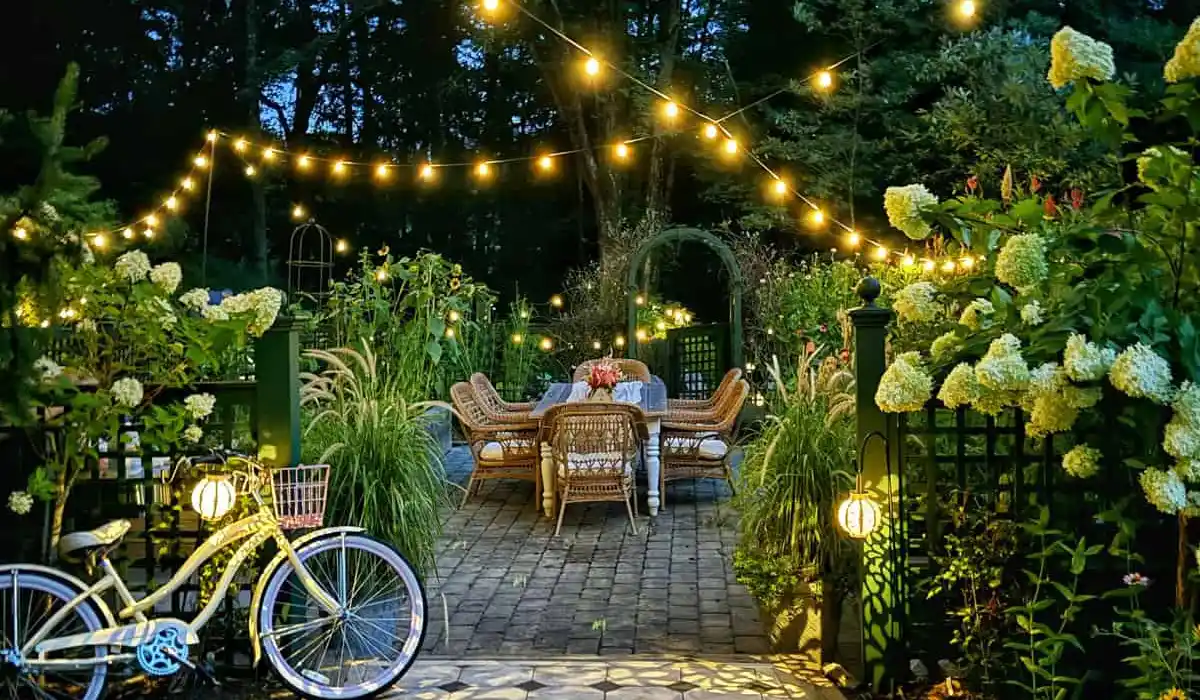
Lighting for Evening Use
Outdoor lighting can extend the useful hours of a garden and improve visibility along paths and steps. Rather than illuminating everything equally, use lighting selectively to highlight important features.
Path lights, low-level landscape lighting, wall fixtures, and accent lights can create different layers. Avoid excessive brightness that eliminates the garden's natural nighttime atmosphere.
Creating a Low-Maintenance Garden
A low-maintenance garden does not mean a garden that requires zero work. Instead, the design reduces repetitive tasks through appropriate plant choices, efficient irrigation, durable materials, and accessible layouts.
One of the most effective decoradyard garden tips is to consider maintenance while designing rather than after problems appear.
Select Plants for Your Lifestyle
If you travel frequently or have limited gardening time, avoid building a landscape that depends on daily attention. Choose plants suited to your climate and group them according to care requirements.
Think about pruning, watering, leaf cleanup, pest monitoring, and seasonal maintenance before committing to a large planting scheme.
Keep Maintenance Access in the Design
Leave enough room to reach plants without damaging neighboring vegetation. Hidden or inaccessible planting beds quickly become neglected because routine tasks become inconvenient.
A practical garden should make its own maintenance easier.
Seasonal Garden Maintenance
A garden changes throughout the year, so the design should account for seasonal growth, weather, and changing visual interest.
In spring, focus on soil preparation, planting, pruning appropriate species, and checking irrigation. During summer, monitor moisture, heat stress, pests, and plant growth. Autumn is useful for cleanup and soil preparation, while winter maintenance depends heavily on the local climate.
Protect Plants During Extreme Weather
Heat, drought, strong wind, heavy rainfall, and frost can all affect garden performance. Recently planted specimens are often particularly vulnerable because their root systems have not yet developed fully.
Use appropriate temporary protection when necessary, but also consider long-term solutions. Choosing plants adapted to local conditions is generally more sustainable than repeatedly protecting plants that cannot tolerate the environment.
Common Garden Design Mistakes to Avoid
Many disappointing gardens are not caused by a lack of creativity. They result from small planning mistakes that become expensive or difficult to correct later.
Avoid planting too densely, ignoring mature plant sizes, creating unnecessary pathways, selecting plants that do not match the available light, and adding decorative features without considering the garden's overall scale.
Avoid Buying Everything at Once
A phased approach often produces better results than completing the entire garden in one weekend. Start with structure, establish the major planting areas, and allow the garden to develop before adding every decorative detail.
This gives you an opportunity to see what works and prevents unnecessary purchases.
Do Not Copy a Garden Without Adapting It
A photograph can provide inspiration, but another garden may have completely different soil, sunlight, climate, drainage, and available space.
Use design ideas as references rather than templates. Adapt the concept to your actual growing conditions.
A Simple Garden Improvement Plan
If your garden currently feels disorganized, you do not need to rebuild everything at once. Use a staged process.
| Stage | Main Task | Purpose |
| 1 | Observe sunlight and drainage | Understand existing conditions |
| 2 | Sketch functional zones | Establish a workable layout |
| 3 | Improve soil where necessary | Create healthier growing conditions |
| 4 | Select suitable plants | Reduce future maintenance |
| 5 | Install paths and key structures | Build the garden framework |
| 6 | Add planting layers | Create depth and seasonal interest |
| 7 | Add lighting and décor | Complete the visual design |
| 8 | Review after growth | Adjust spacing and maintenance |
This approach is more practical than attempting to perfect every detail immediately.
How to Make the Garden Feel Connected to Your Home
A successful outdoor area should feel like a natural continuation of the house. Repeat colors, materials, shapes, or textures from the home's exterior in selected garden elements.
For example, a brick house might work well with warm-toned paving or terracotta containers, while a contemporary home may benefit from simple geometric planters and restrained materials.
The objective is not to make everything identical. Subtle repetition creates visual continuity without making the garden look artificial.
Decoradyard Garden Tips for Long-Term Success
The strongest garden designs are adaptable. Plants grow, household needs change, and outdoor spaces often need to serve different purposes over time.
Leave some flexibility in the layout so furniture can move, containers can be replaced, and planting areas can evolve. Avoid filling every available space simply because it is empty today.
A successful garden should become better as it matures rather than requiring constant redesign.
Frequently Asked Questions
What are the most important decoradyard garden tips for beginners?
Start by understanding sunlight, soil, drainage, available space, and how you want to use the garden. Then choose plants that match those conditions before adding decorative elements.
How can I make a small garden look bigger?
Use vertical planting, simple paths, limited materials, layered plants, and one strong focal point. Avoid filling the space with too many unrelated decorations.
What is the best way to choose garden plants?
Consider local climate, sunlight, soil, water requirements, mature size, and maintenance needs. A visually attractive plant is only a good choice if it can thrive in your garden.
How often should a garden be watered?
There is no single schedule that works for every garden. Check soil moisture and consider plant type, weather, soil composition, season, and recent rainfall before watering.
Does mulch really help garden plants?
Yes. Appropriate mulch can help conserve soil moisture, suppress weeds, moderate soil temperature, and improve the appearance of planting beds. It should be applied correctly and kept away from trunks and stems.
How can I create a low-maintenance garden?
Choose plants adapted to your climate, group plants with similar water requirements, use efficient irrigation, provide accessible maintenance routes, and avoid planting species that require more care than your schedule allows.
Should decoration come before planting?
Usually, the basic garden structure should come first. Establish the layout, pathways, growing conditions, and major planting areas before adding smaller decorative features.
How do I prevent my garden from looking cluttered?
Use repetition and restraint. Limit the number of materials and decorative styles, provide enough empty space, and give major features room to be noticed.
Conclusion
The most effective decoradyard garden tips are not about filling every corner with plants or expensive decorations. They are about creating a deliberate relationship between space, plants, people, materials, and maintenance.
Start with the conditions you already have, develop a practical layout, choose plants according to their real requirements, and allow enough room for future growth. Once the functional foundation is correct, lighting, containers, edging, furniture, and other decorative details can add personality without compromising the garden's health.
For more home and outdoor improvement ideas, explore HomeInteresting.com and build your garden around what will remain useful and beautiful for years rather than what simply looks impressive on day one.