Office Kitchen Cleaning: A Complete Guide for a Hygienic Workplace
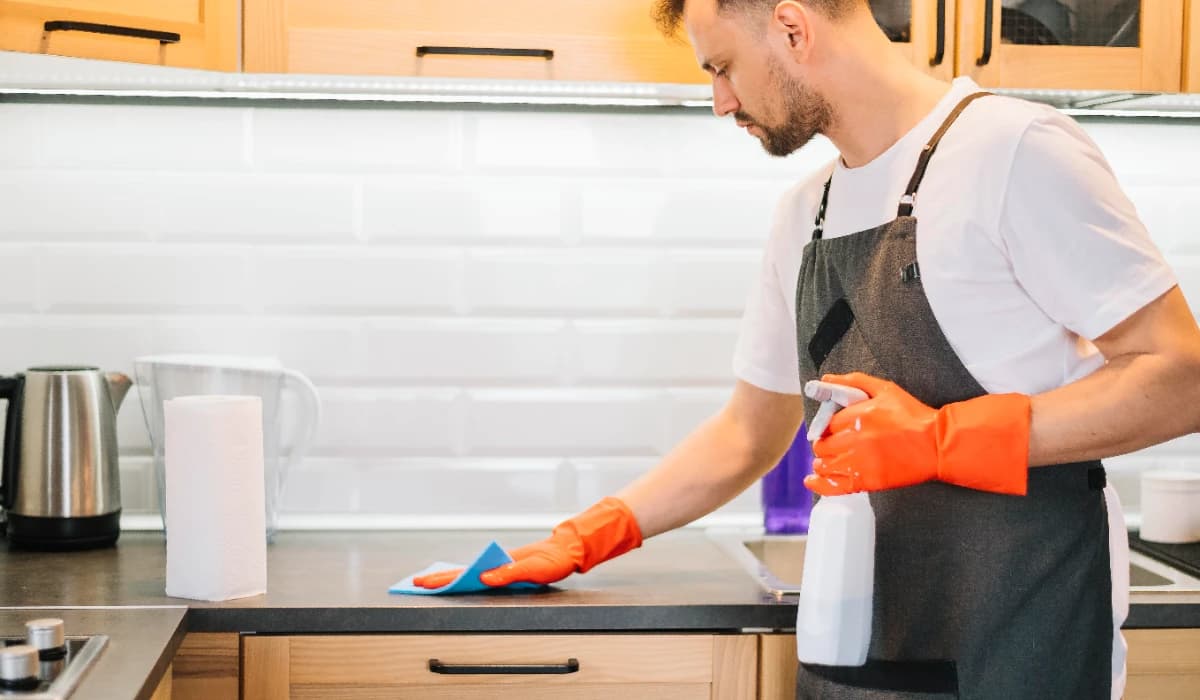
An effective office kitchen cleaning routine is essential for maintaining a healthy, organized, and welcoming workplace. Since the office kitchen is shared by multiple employees every day, it quickly becomes one of the busiest areas in the building. Food spills, dirty dishes, overflowing bins, and frequently touched surfaces can easily become breeding grounds for bacteria if cleaning is neglected.
A clean office kitchen isn't only about appearance. It helps reduce germs, prevents unpleasant odors, improves employee morale, and creates a professional environment for both staff and visitors. Whether you manage a small office or a large corporate workspace, following a structured office kitchen cleaning routine makes daily maintenance much easier while protecting everyone's health.
Why Office Kitchen Cleaning Matters
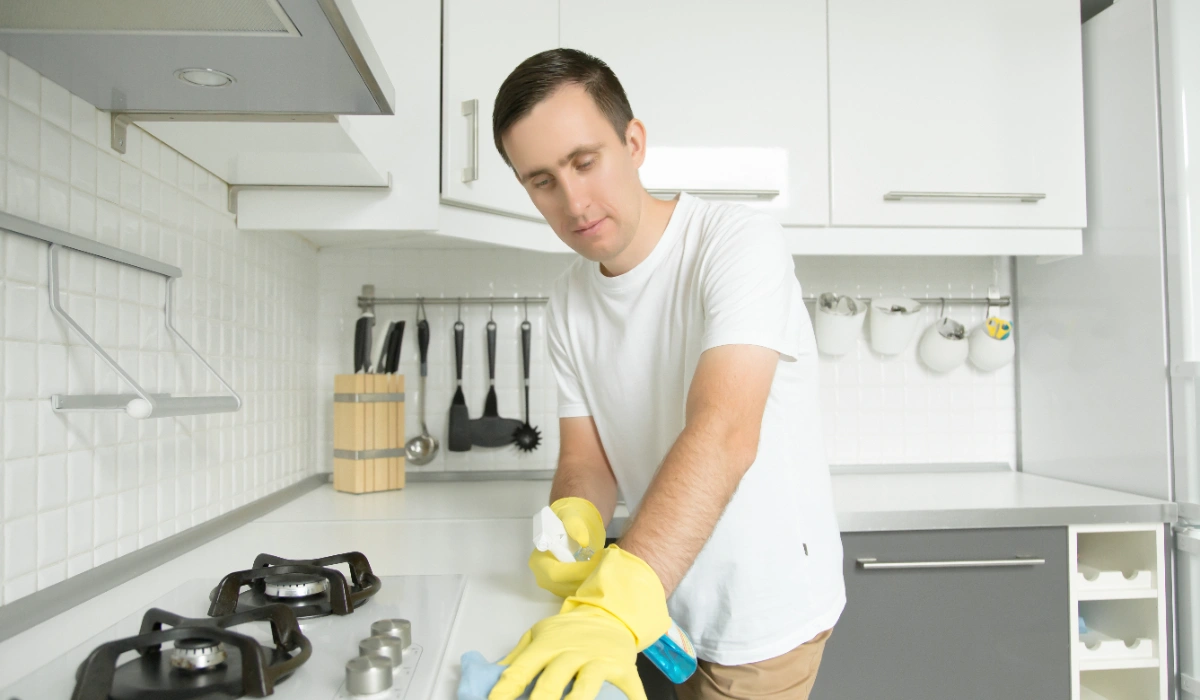
The office kitchen is where employees prepare meals, enjoy coffee breaks, and interact with colleagues. Because so many people use the same appliances and surfaces, germs spread much faster than in individual workspaces.
A properly maintained kitchen also reflects the company's standards. Employees appreciate working in a clean environment, while visitors and clients form positive impressions when shared spaces are well maintained.
Benefits of a Clean Office Kitchen
- Reduces bacteria and viruses
- Prevents unpleasant odors
- Improves employee satisfaction
- Extends appliance lifespan
- Reduces pest infestations
- Supports workplace health and safety
- Creates a professional workplace appearance
Areas That Need Regular Office Kitchen Cleaning
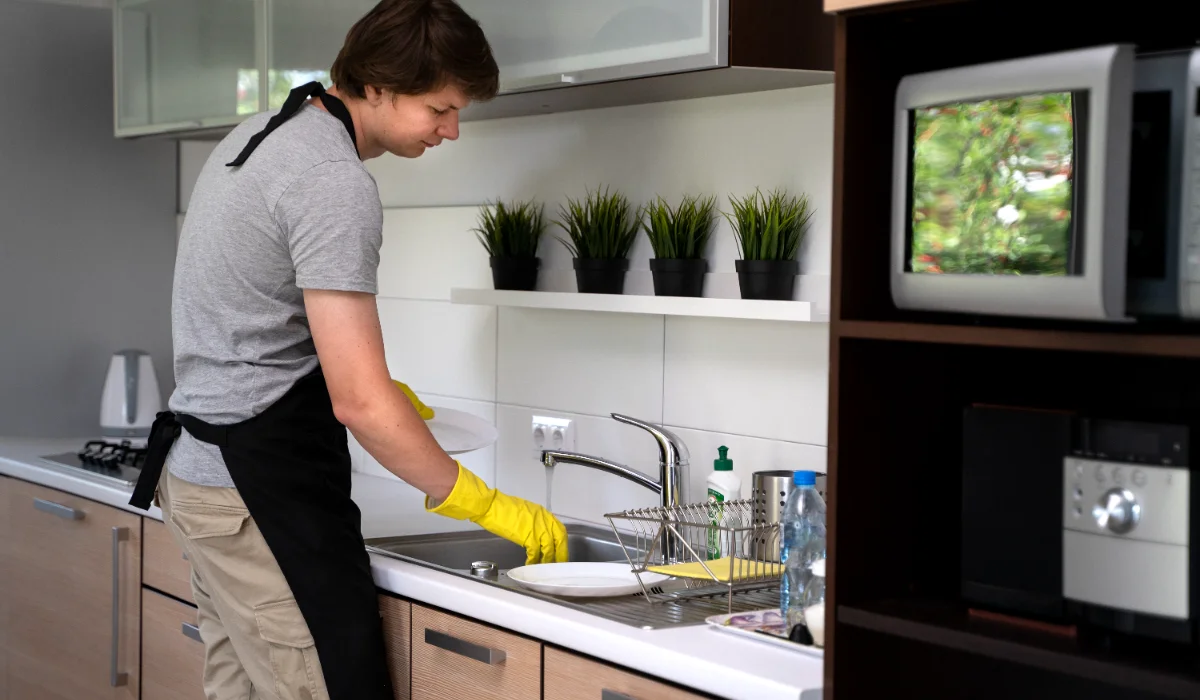
Many businesses only clean visible surfaces while overlooking areas that collect the most germs.
High-Touch Surfaces
These should be disinfected every day:
- Refrigerator handles
- Microwave buttons
- Coffee machine controls
- Cabinet handles
- Drawer pulls
- Door handles
- Light switches
- Faucet handles
- Water dispenser buttons
Food Preparation Areas
Food preparation surfaces require food-safe disinfectants to prevent cross-contamination. Always wipe counters after every meal preparation and sanitize them at the end of the day.
Daily Office Kitchen Cleaning Checklist
Consistency is the secret to maintaining a hygienic workplace. Small cleaning tasks completed every day prevent dirt from building up.
| AreaDaily Task | |
| Countertops | Wipe and disinfect |
| Sink | Clean and sanitize |
| Refrigerator Handle | Disinfect |
| Microwave | Remove food splatters |
| Coffee Machine | Empty grounds and wipe exterior |
| Dishwasher | Run final cycle if full |
| Floor | Sweep and mop spills |
| Trash Bins | Empty and replace liners |
Clean and Organize the Office Refrigerator

The refrigerator often becomes the dirtiest appliance in the office because employees forget leftovers and expired food. A weekly inspection prevents mold growth and unpleasant smells.
Remove every item before cleaning. Wash shelves and drawers using warm water and a mild cleaning solution, then dry them completely before replacing food. Encourage employees to label containers with names and dates to reduce waste.
Refrigerator Best Practices
- Remove expired food weekly.
- Wipe spills immediately.
- Store raw and cooked foods separately.
- Keep refrigerator temperature below 40°F (4°C).
- Use baking soda to reduce odors.
Keep Countertops Germ-Free
Countertops are constantly exposed to food crumbs, drink spills, and bacteria transferred from hands. Cleaning these surfaces several times throughout the day helps prevent contamination.
Use a food-safe disinfectant with a microfiber cloth instead of abrasive scrubbers. Microfiber traps dirt more effectively and reduces the risk of scratching countertop materials.
Clean Shared Appliances Properly
Office appliances are used repeatedly throughout the day. Without regular maintenance, they accumulate grease, food particles, and mineral deposits.
Microwave Cleaning
Heat a bowl of water with lemon slices for several minutes. The steam softens dried food, making it easier to wipe away stains without harsh scrubbing.
Coffee Machine Maintenance
Empty used coffee grounds daily and wash removable components. Descale the machine every month to improve performance and maintain coffee quality.
Kettle Care
Mineral buildup affects both efficiency and taste. Fill the kettle with equal parts water and white vinegar, leave it for an hour, then rinse thoroughly before use.
Dishwasher Maintenance
Clean the filter every month and run an empty cleaning cycle using dishwasher cleaner. This prevents odors and keeps dishes hygienic.
Sanitize the Sink and Drain
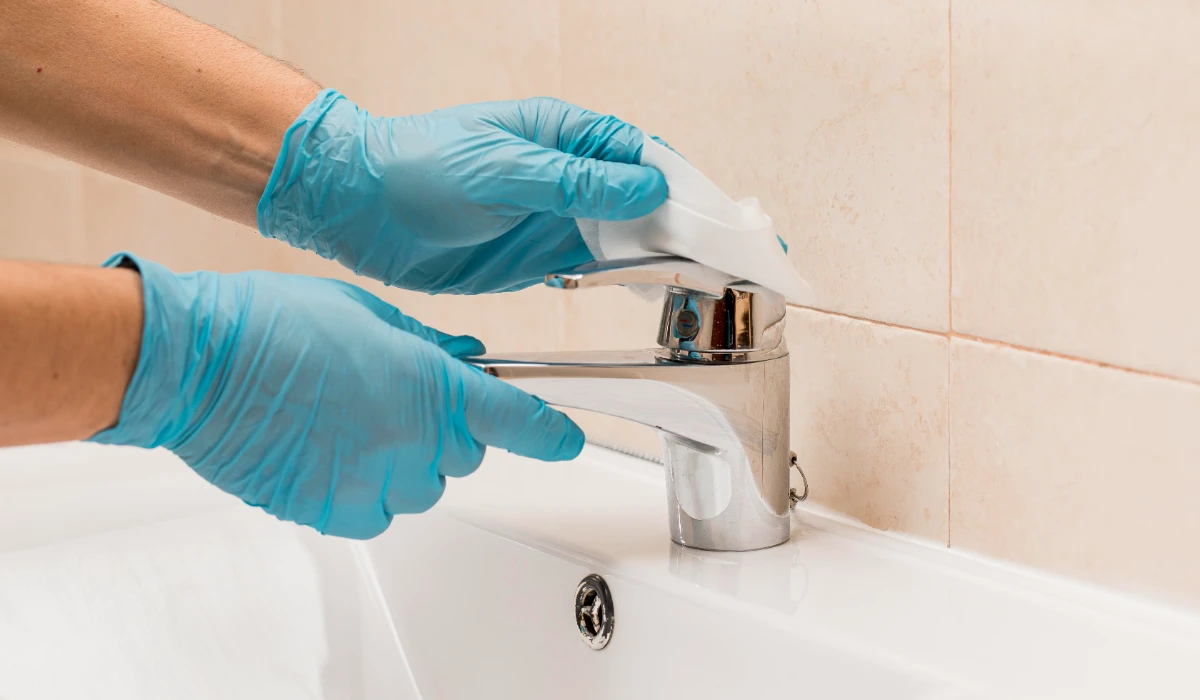
The kitchen sink handles food waste, dirty dishes, and handwashing, making it one of the most contaminated areas in the office.
Clean the basin using a disinfectant designed for kitchens. Once a week, pour hot water followed by baking soda and vinegar down the drain to reduce grease buildup and eliminate odors.
Don't Forget Cabinets and Storage Areas
Kitchen cabinets often collect crumbs, dust, and expired food items that go unnoticed.
Inspect shelves weekly, remove unnecessary clutter, wipe interior surfaces, and organize supplies. Store coffee, tea, sugar, and disposable items in sealed containers to discourage pests.
Clean Floors Every Day
Kitchen floors collect crumbs, grease, and liquid spills throughout the day. Leaving them unattended increases the risk of slips and attracts insects.
Sweep first to remove loose debris before mopping with a neutral floor cleaner suitable for the flooring material. Pay extra attention to areas beneath appliances and cabinets where dirt tends to accumulate.